
Most UGC niche guides rank niches by how big the end-market is. A $152 billion pet health market. A $100 billion beauty market. Those numbers describe how much consumers spend on products. They tell you nothing about how much brands spend on UGC hooks and creator content.
The niches that consistently pay UGC creators are not necessarily the biggest product markets. They are the ones where brands need authentic, native-feeling content that their in-house teams cannot produce, and where specific hook strategies align with how audiences actually make decisions. If you are trying to pick a niche or improve your UGC hooks in one, what matters is not market size. It is what works structurally and why.
What Are the Most Profitable UGC Niches Right Now?
The most profitable UGC niches in 2025–2026 are beauty and skincare, health and fitness, pet care, fashion, and consumer tech. These five niches appear at the top of every independently published niche ranking reviewed for this piece, regardless of the author or methodology used.
That convergence across independently authored sources is worth trusting, even though no single ranking is based on primary research. What makes these five work is not just brand demand. Each niche has a built-in psychological trigger that makes UGC content feel necessary rather than promotional.
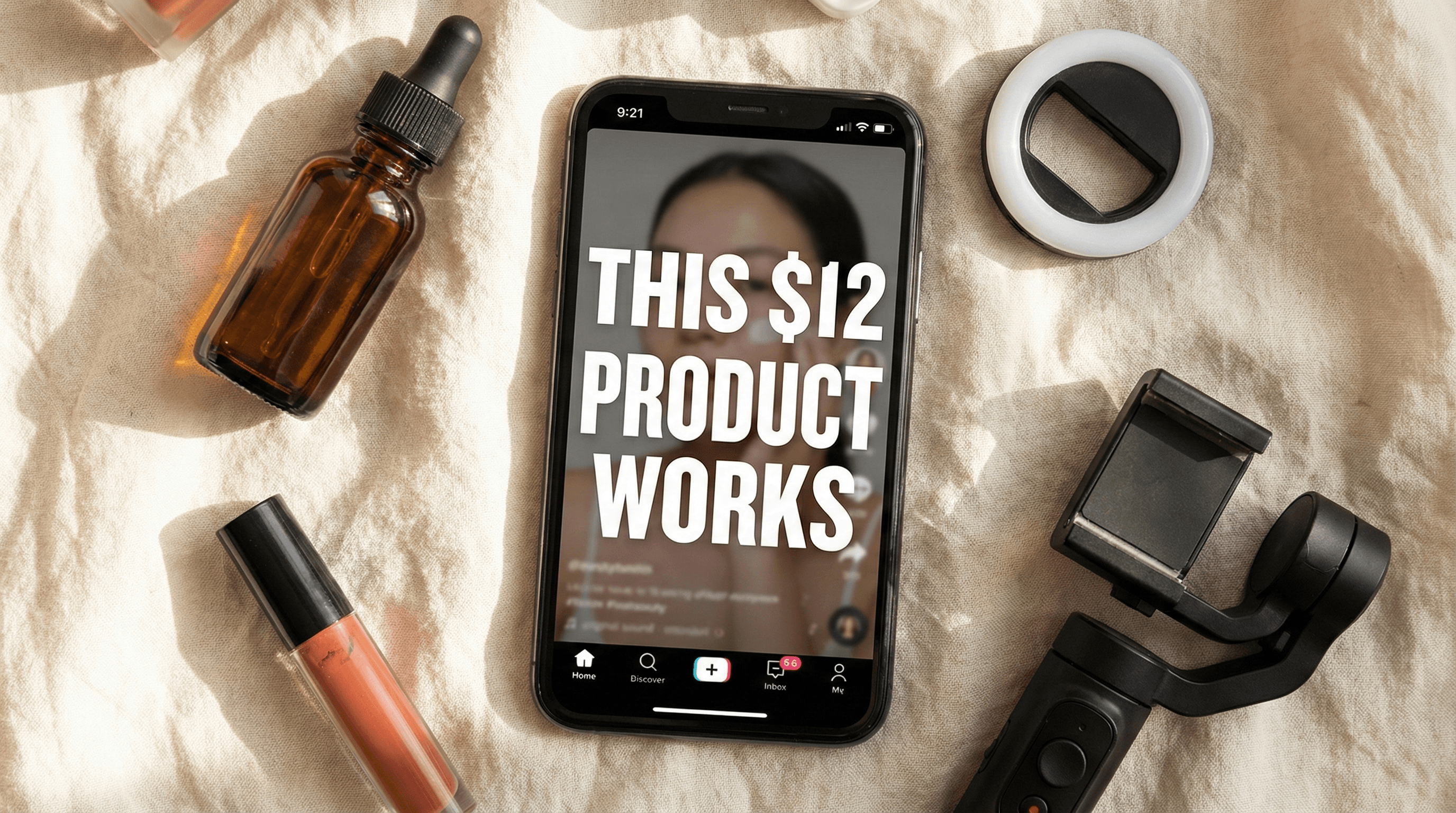
Beauty runs on transformation and authenticity. A close-up texture shot of a $12 serum replacing a $90 luxury product is a hook, a proof point, and a purchase trigger in one frame.
Fitness runs on challenge urgency and aspirational-but-attainable progress, showing realistic bodies and achievable routines rather than peak-performance displays.
Pet care runs on emotional storytelling: a rescue dog's health transformation or a supplement that visibly improves coat quality generates the kind of shares that product demos alone never will.
Fashion converts through identity, not aesthetics. "Dressing like a movie villain" outperforms a straight product display because it gives the viewer a character to try on, not just a garment.
Tech sells through problem-solution: name a frustration the viewer has with their phone charger, then show the $9 fix.
UGC creators do not need followers. Brands pay for the content asset, not the audience. The brand posts it on their own channels or runs it as a paid ad. That is the definitional distinction between UGC and influencer marketing, and it means a creator with zero following can start earning in any of these niches if the content is structurally sound.
What UGC Niches Are in High Demand but Underserved?
Emerging niches with growing brand demand include AI and productivity tools, problem-specific skincare (acne, rosacea, hyperpigmentation), and TikTok Shop product demos. Practitioner observations suggest brand demand in these categories is outpacing creator supply, which means less competition and more negotiating power for creators who establish themselves early.
What Is a Hook in UGC and Why Do Most Fail?
A UGC hook is the first one to three seconds of a video that determines whether a viewer stops scrolling or keeps going. It is the single most important structural element in any short-form video, because if the hook fails, nothing else in the video matters. Watch time drops, the algorithm sees the exit signal, and distribution shrinks.
That chain is structurally sound across every platform, even though no platform has officially confirmed how its algorithm weights those first seconds. The "3 second hook" principle is widely cited across practitioner sources as the window you have to earn or lose attention.
Many creators think a hook is a catchy opening line. That is only one third of it. An effective 3-second hook requires three simultaneous elements:
- A visual change that interrupts the scroll pattern
- An emotional trigger that creates stakes
- Urgency that makes watching feel time-sensitive
A verbal opening alone, without a visual pattern interruption, underperforms consistently.
What Makes a Strong Hook Example vs. a Weak One?
Across every niche studied, the single most consistent pattern separating high-performing UGC hooks from forgettable ones is specificity:
| Strong Hook | Weak Hook | Why It Works |
|---|---|---|
| "This $12 product works better than luxury brands" | "Check out this amazing product" | Anchored number + specific comparison |
| "Fixed mine in 3 days" | "This product really works" | Time frame + personal proof |
| "Stop using this if you want clear skin" | "You need to try this" | Negative/stop pattern + specific outcome |
| "If you hate cardio but want abs" | "Great workout tip" | Relatable pain point + desired result |
Five UGC hook types appear consistently across practitioner sources: the problem hook ("Why is no one talking about this?"), the bold claim hook ("This $12 product works better than luxury brands"), the curiosity hook ("I didn't believe this until I tried it"), the relatable hook ("If you hate cardio but want abs"), and the negative/stop hook ("Stop using this if you want clear skin"). These are working categories, not experimentally validated types, but they give you a structural starting point for scripting.
What Are Good UGC Hook Examples? Accounts Worth Studying
Studying top accounts is not about copying their scripts. Copying surface formulas without your own voice produces scripted-feeling content that audiences identify as inauthentic. What you are looking for are structural moves you can adapt to your own niche and style.
Tools like Tracker let you surface the specific accounts and UGC hooks winning in your niche right now, ranked by actual engagement data across TikTok, Instagram, and YouTube, so you can study structural patterns instead of scrolling manually.
Beauty. On TikTok, @winialvarezofficial (Wini Alvarez) blends skincare with lifestyle so products feel like part of a daily routine, not a sales pitch. Her "skin journey" posts start with a problem already visible in frame one (redness, cakey texture) then layer the fix. That is the structural move worth copying: show the problem before you show the product. On Instagram, @charlotteparler (Charlotte Palermino, licensed esthetician) mixes science, myth-busting, and close-up demos: "Stop wasting money on this skincare step", earning trust from consumers and brands at the same time. @sarahpalmyra (Sarah Palmyra) is known for calling out overhyped products with time-tested claims: "I wore this for 10 hours, here's the truth." The pattern: problem + time frame + visible proof.
Fitness. On TikTok, @senada.greca (Senada Greca, 2.6M TikTok, 5.1M Instagram) hooks with pain-relief and posture: "If you sit all day, do this every morning." That targets mass-market search intent, not just gym rats. @thefitnessmarshall (Caleb Marshall, 3.8M) syncs follow-along dance routines to trending songs, with immediate movement in frame one, no intro, no fluff. On Instagram, @makaylaanisa (Makayla Anisa, 2.8M) positions with "Leg day for lazy girls", realistic over hardcore. The pattern: accessibility and body-part specificity drive retention more than production quality.
Pet care. On TikTok, @crusoe_dachshund (Crusoe the Dachshund, 2.3M TikTok) runs story-driven skits where product appears organically ("Today I tried being a lifeguard") and the treat, harness, or toy shows up inside the narrative, never as a pitch. @mayapolarbear (Maya, 5.5M TikTok) uses soft-aesthetic, ASMR-ish formats like "POV: your dog hears you open the snack cabinet", perfect for wellness-oriented pet brands. @brodiethatdood (Brodie, 6.9M TikTok) mixes service-dog tasks with playful personality and before/after training arcs. The pattern: emotional connection plus a specific product or health benefit is what brands actually pay for. Entertainment-only pet content is harder to monetise.
Fashion. On TikTok, @wisdm (Wisdom Kaye) hooks with character concepts like "If this anime character lived in New York, here's what they'd wear", giving regular outfits a narrative identity that makes them shareable beyond fashion audiences. The narrative is the hook; the clothes are secondary. @makaylaanisa crosses into athleisure with problem-led hooks: "Gym fits that actually stay up during squats." The pattern: identity transformation outperforms straight product display.
Tech. On TikTok, @mkbhd (Marques Brownlee, 2M+) opens with a direct product verdict in the first sentence, building credibility through "I've tested this for 30 days, here's what I actually think." The "Amazon find under $20" format is a category unto itself: price-anchored hook, fast demo, affiliate link. The pattern: demonstration is the hook, not description.
What Is the Hook Strategy That Makes Content Repeatable?
A hook strategy is a repeatable framework for scripting the opening seconds of your videos so you do not start from scratch every time you post. Three frameworks cover most UGC hook styles across niches.
Pain Point + Specific Outcome + Time Frame
"If you have dry skin, this fixed mine in 3 days." The formula forces specificity and signals credibility through concreteness. This works across every niche, from beauty ("My skin was breaking out again...") to tech ("Your phone is charging wrong, here's why you're killing your battery") to finance ("I saved $12,000 in 8 months on a $40K salary using this one method").
What Is the 3 Hook Strategy?
The 3 hook strategy layers three beats into the first seconds of a video: (1) Scroll Stop, a big statement or pain point that forces a pause; (2) Curiosity Layer, why the viewer should care; (3) Value Promise, what they gain by watching. This escalation from attention to interest to desire mirrors the AIDA framework from traditional copywriting, adapted for a three-second window. Each layer builds on the previous one, giving the viewer three separate reasons to keep watching within the opening moments.
What Is the 33 33 33 Rule in Social Media?
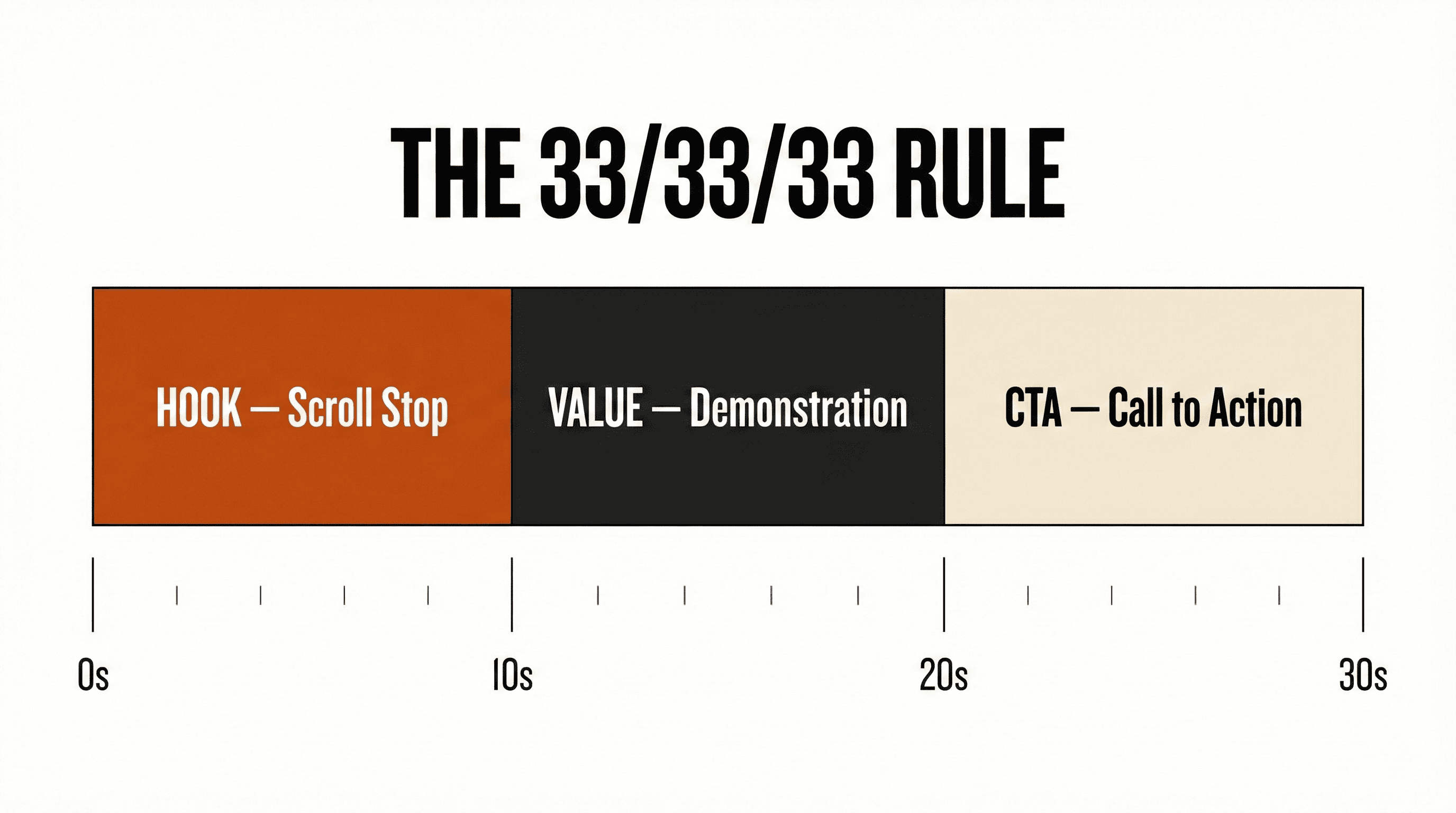
The 33 33 33 rule divides the entire video into three equal parts: 33% hook, 33% value delivery, 33% call to action. It is a working structural ratio for scripting, not a data-backed law. But for new creators who struggle with pacing, it gives you a scaffolding to build on. A 30-second video under this rule would dedicate the first 10 seconds to hooking the viewer, the middle 10 seconds to delivering the core value or demonstration, and the final 10 seconds to a clear call to action.
Where to Find UGC Hooks Worth Studying
TikTok Creative Center shows top-performing ad hooks filtered by niche and region, with real performance data. Meta Ads Library shows every active ad on Instagram and Facebook. Ads running for 30 or more days are likely converting, because brands stop non-performing ads. These are the two highest-quality free sources for UGC hook research.
Frequently Asked Questions
What are some UGC niches?+
The most established UGC niches are beauty and skincare, health and fitness, pet care, fashion, and consumer tech. Emerging niches with growing demand include AI and productivity tools, problem-specific skincare (targeting conditions like acne or rosacea), TikTok Shop product demos, home organization, and modest fashion. Brands in these categories consistently seek UGC creators because in-house teams cannot replicate the authentic, native-feeling content that performs on short-form platforms.
What is a hook in UGC?+
A UGC hook is the first one to three seconds of a short-form video designed to stop the viewer from scrolling. An effective hook combines three simultaneous elements: a visual change that interrupts the scroll pattern, an emotional trigger that creates personal stakes, and urgency that makes watching feel time-sensitive. The hook determines whether the algorithm distributes the video widely or buries it.
What are some good hook examples?+
Strong UGC hooks use anchored specificity: "This $12 serum replaced my $90 moisturizer," "I fixed my acne in 3 days with this," or "Stop using this if you want clear skin." Each of these works because it names a specific number, outcome, or consequence. Weak hooks use vague language like "Check out this amazing product" or "You need to try this," which gives the viewer no concrete reason to stop scrolling.
What is the 3 hook strategy?+
The 3 hook strategy is a scripting framework that layers three beats into the first seconds of a video. The first beat is the Scroll Stop (a bold statement or pain point that interrupts scrolling). The second is the Curiosity Layer (a reason to care). The third is the Value Promise (what the viewer gets by watching). This structure mirrors the AIDA framework adapted for short-form video.
What is a 3 second hook?+
A 3 second hook refers to the principle that a viewer decides whether to keep watching or scroll past a video within the first three seconds. This is the window to deliver a visual pattern interruption, an emotional trigger, and a reason to stay. While no platform has officially confirmed the exact timing, the principle is widely cited across practitioner sources and aligns with how short-form algorithms prioritize early watch-time retention.
What are the best UGC hooks for increasing social media engagement?+
The best UGC hooks for engagement combine specificity with emotional triggers. Problem hooks ("Why is no one talking about this?") generate comments. Bold claim hooks ("This $12 product outperforms luxury brands") generate saves and shares. Curiosity hooks ("I didn't believe this until I tried it") drive watch-through rate. The key is matching your hook type to your niche: beauty performs best with transformation hooks, fitness with challenge hooks, and tech with problem-solution hooks.
How to write UGC hooks that convert views into sales?+
Use the Pain Point + Specific Outcome + Time Frame formula: "If you have [problem], this fixed mine in [time frame]." This structure works because it establishes a problem the viewer identifies with, promises a specific result, and adds a credibility-building time constraint. Pair it with a visual demonstration in the first frame, not a talking-head introduction. The "Amazon find under $20" format is a proven conversion structure: price-anchored hook, fast product demo, direct link.
Where can I find examples of successful UGC hooks used by top companies?+
TikTok Creative Center (ads.tiktok.com/business/creativecenter) filters top-performing ad creatives by niche, region, and time period, showing real performance data. Meta Ads Library (facebook.com/ads/library) displays every active ad on Instagram and Facebook. Ads running for 30 or more days are likely converting because brands stop non-performing ones. Tracker by CreatorGrid surfaces the top-performing accounts and posts in any niche, ranked by actual engagement data across TikTok, Instagram, and YouTube, so you can study winning hooks by category instead of scrolling manually.
You do not need to post 200 videos a day to improve. You do not need a perfect hook formula before you start. What you need is to pick a niche with genuine brand demand, study the UGC hooks that top accounts in that niche are landing, and build your own voice around those structures. The creators who win are not the ones who copy the best script. They are the ones who understood what it was doing and made it theirs.
Track any public profile across TikTok, Instagram, and YouTube. See what hooks, formats, and niches are driving real engagement.
Find the hooks and niches that actually convert
One dashboard. The metrics that matter. Built for creators who take growth seriously.
- Surface top-performing accounts and posts by niche
- Track engagement data across TikTok, Instagram & YouTube
- Study winning hook patterns with real performance metrics